Why Horses Kick and What to Do About It

A horse that kicks can be dangerous. Even if your horse is merely kicking at a biting fly, and you happen to get in the way, you can be hurt. Some horses develop a bad habit of kicking and can be a menace on the ground, or while being ridden or driven.
Why Horses Kick
Horses kick for a number of reasons. As mentioned above, a horse may kick at biting flies around its legs and belly. A horse will kick at its belly if it has colic. They may kick or stamp if something like a prickly weed tickles their legs or belly. Usually, these aren't really powerful kicks—after all, if the intent was to get rid of the discomfort, they could further hurt themselves.
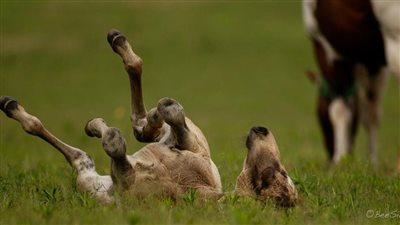
Horses are often seen kicking at each other in the pasture. When playing, these won't be powerful kicks, and they'll rarely connect with another horse. This can simply be a display of high spirits, often seen as the horse gallops and bucks to burn off energy.
Defense
Horses also kick to defend themselves, and these kicks are often powerful and well aimed. Horses may defend themselves by kicking when they feel another horse is getting too close to its food, its foal, a special herd mate, or if another horse is acting aggressively towards it. In the wild, horses use powerful kicks, often with both back legs at the same time, to ward off predators. A mare may kick at a stallion if it is not receptive to being bred.
This defensive instinct may explain why some horses kick when they become alarmed—such as when a person, dog, or another animal 'pops into view' behind the horse. Or if a piece of equipment comes loose and drags behind or alongside the horse, it may react by kicking at it. A horse being trained to pull, may kick at the equipage, unless it is introduced to it slowly, and allowed to get used to the sight and noise of a horse-drawn vehicle.
When Kicking Becomes a Problem
Kicking while being handled, ridden, or driven can become a dangerous habit or vice. Somewhere along the line, the horse has learned that kicking is the best strategy to rid itself of something it dislikes. It then becomes a habit that the rider, handler, or driver must always keep in mind. Some horses get antsy when another horse is ridden too close behind and may kick to warn the