Protecting Horses From Horse and Deer Fly Bites
Content
flies Klock et al. 1973 Petersen et al. 2009.
Control
Control of horse and deer flies can be challenging. Horse and deer flies develop in water and are strong fliers and habitat modification in these environmentally sensitive areas is difficult. Therefore control is usually focused on intercepting adult flight or protective measures for horses against adult bites.
Turnout and Pasture Management
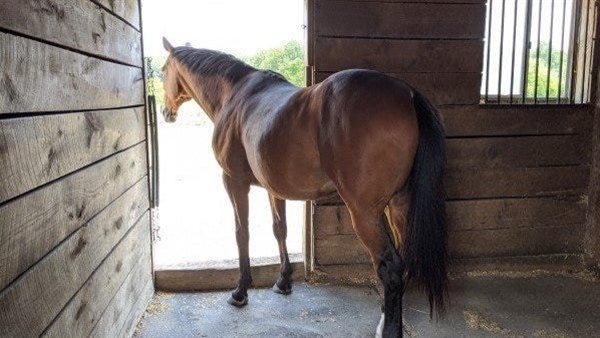
Horse and deer flies are active around wooded areas especially if there is some form of water nearby. These flies are active in the sun and avoid areas of shade. Runin shelters or large canopy trees located away from wooded edges can give horses refuge from the flies Raymond and Rousseau 1987 Figure 3. If pasture space can be increased this will allow horses to naturally move away from bitingfly pressure. Some species of horse and deer flies are territorial. Their range may include only one pasture or portion of a pasture and sometimes bites can be avoided by turning horses out in another pasture away from horse and deer fly activity. Turning horses out at night instead of the day can reduce biting because horse and deer flies are daytime biters.
Trapping
Horse and deer flies use their vision to locate their hosts. Current commercially available horse and deer fly traps use the vision of these flies to maximize attraction and trapping Wall and Doane 1980 Watson et al. 2007 Kline et al. 2018 Figure 4. Three types of traps are available for horse and deer flies 1 the Horse Pal trap and the Bitelite HTrap which use a suspended black ball 2 the Epps Biting Fly Trap which uses a large darkcolored sheet and 3 box traps that are stationary darkcolored areas.
The Horse Pal trap uses a suspended black ball to mimic an animal. The ball is covered with a canopy that encourages
the natural upward flight of flies attracted to the swaying ball. Flies are trapped in a clear jar at the top of the canopy. The principle is similar for the BiteLite HTrap. The Horse Pal trap has four legs while the BiteLite HTrap is a single post.
The Epps Biting Fly Trap uses a large darkcolored tarp that may resemble a large animal. Instead of trapping flies the Epps Biting Fly Trap deflects flies that land on the panels into trays of soapy water where they will drown. This trap requires regular maintenance to remove flies from the trays often so
Continue Reading...