Preventing Colic in Horses
Management can play a key role in the prevention of colic. The following guidelines can maximize a horse's health and reduce the risk of colic.
- Establish a daily routine including feeding and exercise schedules and stick to it.
- Feed a high quality diet comprised primarily of roughage where possible.
- Avoid feeding excessive grain and energy-dense supplements. (At least half the horse's energy requirements should be supplied through hay or forage. Twice as much energy should be supplied from a roughage source than from concentrates.)
- Divide daily concentrate rations into two or more feedings rather than one large feeding to avoid overloading the horse's digestive tract.
- Hay is best fed free-choice.
- Set up a regular parasite control program with the help of your equine practitioner. Utilize fecal testing to determine its effectiveness.
- Provide exercise and/or turnout on a daily basis.
- Change the intensity/duration of an exercise regime gradually.
- Provide fresh, clean water at all times. (The only exception is when a horse is excessively hot after exercise. Then it should be given small sips of lukewarm water until it has recovered.)
- Avoid medications unless they are prescribed by your equine practitioner, especially pain-relief drugs (analgesics), which can cause ulcers.
- Check hay, bedding, pasture, and environment for potentially toxic substances, such as blister beetles, noxious weeds, and other ingestible foreign matter.
- Avoid putting feed on the ground, especially in sandy soils.
- Make dietary and other management changes as gradually as possible.
- Reduce stress. Horse's experiencing changes in environments or workloads are at a high risk of intestinal dysfunction.
What to do?
If you suspect your horse is suffering from colic, CALL YOUR VET and be prepared to provide the following information:
- Temperature, pulse, and respiratory rate;
- Colour of mucous membranes and capillary refill time (tested by pressing on the gums, releasing, then counting the seconds it takes for colour to return);
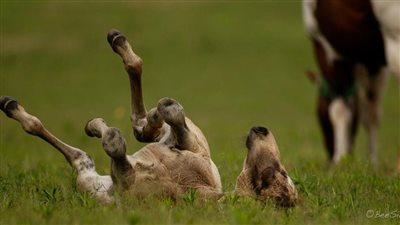
- Behavioural signs, such as pawing, kicking, rolling, depression, etc.;
- Digestive noises or lack thereof;
- Bowel movements, including colour, consistency, and frequency;
- Any recent changes in management, feeding, or exercise;
- Medical history including deworming and past episodes of abdominal pain;
- Breeding history and pregnancy status if the patient is a mare and recent breeding history if the patient is a stallion.