5 Steps of Spring Horse Care

Content
parasites have two very different control strategies. Your veterinarian can help design a parasite control program that is tailored to the needs of your horse or herd.
4 Soundness Evaluation
Just as your horses dental health should be addressed prior to the summer riding season it is wise to have his soundness evaluated as well. Subtle musculoskeletal pain can certainly cause trouble in training but may not appear as overt lameness. Because of this it is best to set your horse and yourself up for success and make sure his body is comfortable and able to do what you are asking.
The veterinarian who assesses your horses soundness will first examine the horses feet limbs neck and back while the horse is standing at rest. Any areas of asymmetry pain swelling or reduced range of motion are recorded as they may hint at signs of trouble. Conformational defects are also noted. While your horse may be perfectly sound with less than ideal conformation these flaws can predispose him to future soundness issues. Sometimes the risk of future lameness can be reduced by compensating for these defects with corrective shoeing or by avoiding certain types of training exercises and footing.
After the standing examination the horse will be observed at the walk and trot on a straight line and circles in both directions. Both hard and soft footing should be used as some types of lamenesses only appear on one type of footing or the other. Flexion tests are often performed to detect more subtle issues or to further characterize an observed lameness. To carry out a flexion test the veterinarian holds the limb in question in flexion before trotting the horse off. If a lameness appears or worsens the flexion test is deemed positive. The veterinarian may also wish to see the horse worked under saddle or in harness depending on what the horse does for a living.
After gathering all this information the veterinarian will provide his or her opinion on the horses soundness. If a problem is found further diagnostic testing may be necessary to help pinpoint the issue. However if no lameness is seen you can carry on into the riding season with peace of mind knowing that your horse will be able to perform painfree and at his best.
5 Broodmare Care
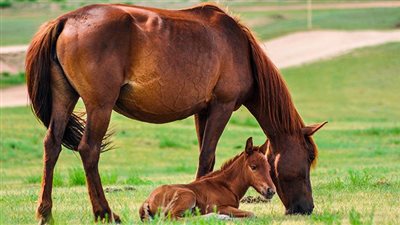
If you are planning to breed your mare this spring additional management and healthcare needs must be considered. While your
Continue Reading...