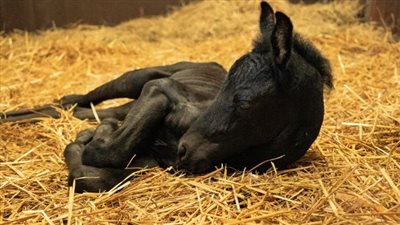
Foal speed ahead: Caring for the newborn horse
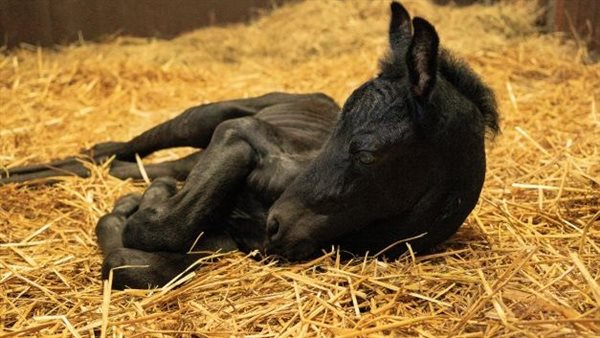
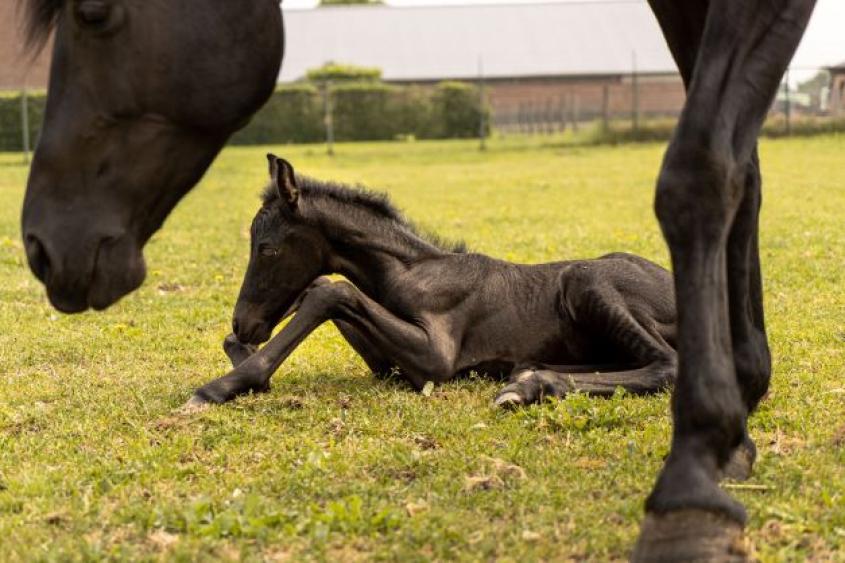
The checklist for evaluating and caring for a newborn foal is
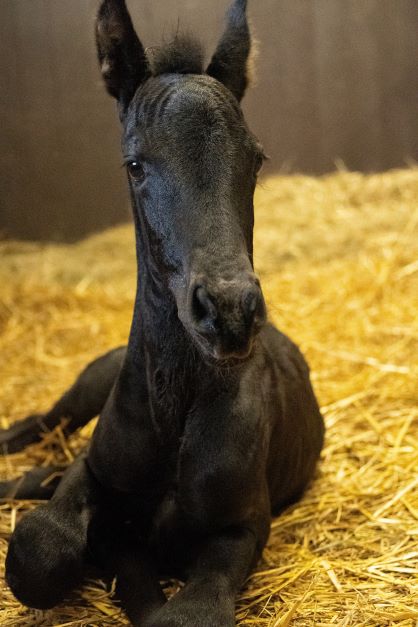
extensive with many things to look out for both during birth and after. Understanding what is normal and abnormal is crucial as humans help our animals begin what will hopefully be a healthy and happy horsey life. Photo Yvon HoogersUnsplash
The checklist for evaluating and caring for a newborn foal is extensive with many things to look out for both during birth and after. Understanding what is normal and abnormal is crucial as humans help our animals begin what will hopefully be a healthy and happy horsey life. Photo Yvon HoogersUnsplash
Horse gestation typically lasts around 342 days with colt pregnancies lasting slightly longer than a fillys. A foal delivered before day 320 is considered premature and may suffer health problems and foals that go beyond 360 days of gestation may also have problems from being in the womb too long.
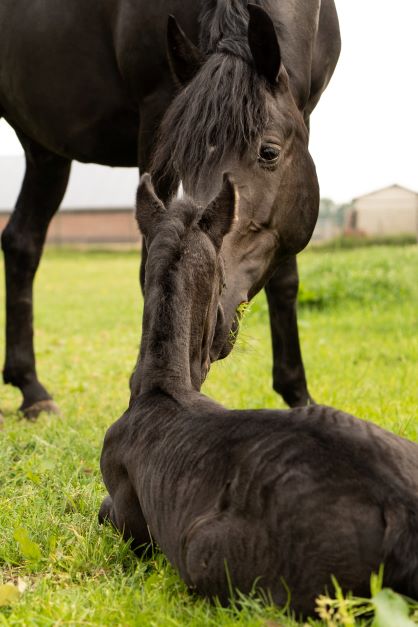
Signs that a mare is about to give birth include her udder filling with milk about two to four weeks before foaling and secretions of small amounts of colostrum one to four days before labor.
Preparing for the big moment
If owners do decide to foal at home they should make a detailed plan with their veterinarian for the event. Those foaling at home should also make sure to have a clean safe and quiet space for the birth
Mares typically foal at night. Being prey horses are trying to find the time of day where they feel the safest and away from the public says Delvescovo. This makes veterinary monitoring during
pregnancy very important. Talk to your vet even before you decide to breed your mare but especially during pregnancy because the vet exam can highlight and detect highrisk pregnancies.
For owners who are new to foaling who cannot monitor around the clock or whose horse has a highrisk pregnancy Delvescovo strongly recommends against foaling at home.
If owners do decide to foal at home they should make a detailed
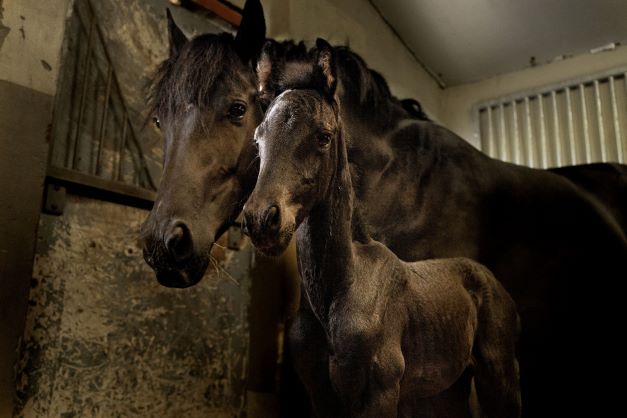
plan with their veterinarian for the event. Those foaling at home should also make sure to have a clean safe and quiet space for the birth. While some mares can successfully foal out in an open pasture Delvescovo notes its typically best to have the mare confined so owners can easily observe the foaling.
This space should be stall measuring a minimum of 14X14 feet with good bedding. Straw is preferable to wood shavings as shavings can stick to the horses and can be aspirated by the foal.
Delivery
During the birth owners should keep a time record. Sometimes especially if its your first foaling its difficult your emotions come into play and its difficult to know how long it took. So write everything down says Delvescovo.
Delivery occurs in three stages
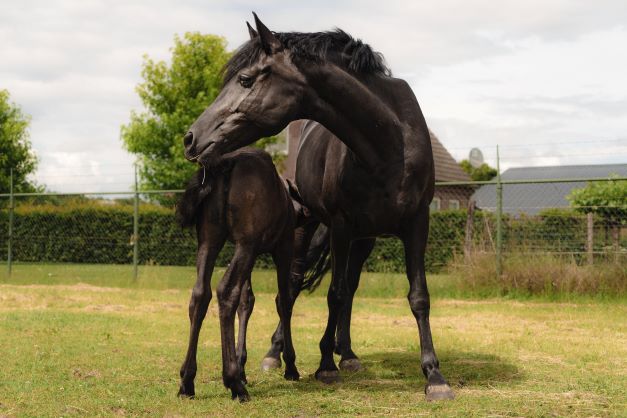
Stage one involves initial uterine contractions which can last between 30 minutes and six hours and manifest as coliclike symptoms in the mare. They might pace around the stall they might pull and sweatthose are all signs of normal uterine contractions.
Stage two comprises the rupture of the water