Foal speed ahead: Caring for the newborn horse
of the Bee Gees Staying Alive.
Be careful not to synchronize with the person whos giving ventilation because they are two very different rhythms says Delvescovo. She recommends using the
by Veterinary Advances Ltd to help with this process.
process.
A newborn foal is a very delicate creature with very unique needs. Horses are prey Delvescovo says. In nature they need to make a very big transition between being in utero and being able to run away from predators.
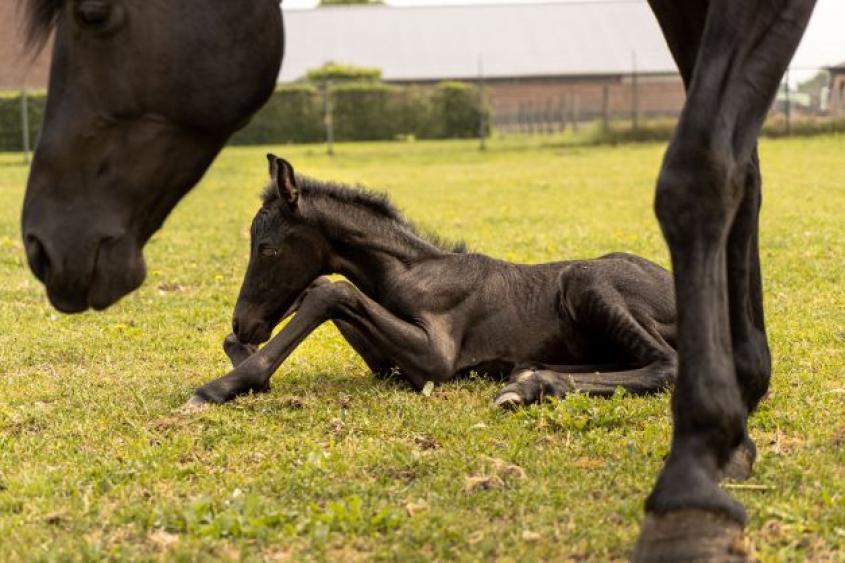
Assessing your new foal
A newborn foal is a very delicate creature with very unique needs. Horses are prey Delvescovo says. In nature they need to make a very big transition between being in utero and being able to run away from predators.
If any stress or pathologies disrupt this transition problems can occur sometimes causing body systems to reverse back to their fetal state. Its very important to know what a newborn does normally and to be proactive when you see something abnormal says Delvescovo.
For a neonatal assessment owners should identify key risk factors connected the mare the foal itself and the pregnancy summarized below
Mare Firsttime mother poor maternal behavior illness history of complications in pregnancy foaling or abnormal foals
Foal Failure of transfer of passive immunity congenital or acquired abnormalities abnormal behavior
Pregnancy Placentitis twins abnormal length
To check for normal foal behavior Delvescovo applies the one two three rule Foals should be standing within one hour. Within two hours the foal should be nursing and the mare passing the placenta. Foals should be passing meconium their first feces within around three hours. Colts should urinate within the first six hours while fillies should urinate in the next 1012.
Nursing is a vital step in the foals health and survival so owners should observe closely to make sure its happening correctly.
Nursing
Nursing is a vital step in the foals health and survival so owners should observe closely to make sure its happening correctly They should observe the foals tongue sealing around the nipple see the foal actively suckling and swallowing. Some foals will not successfully latch or have trouble swallowing known as dysphagia which can show up as milk coming up through the nostrils. When the foal is done nursing owners should check the mares udder to see if it has been emptied.
Owners must also look for the first meconium. If the foal does not defecate within the first several hours there may be an impaction. Signs include restlessness tail switching and straining to defecate.
Umbilical cord care is another key component of postfoaling management. If the cord does not break on its own after some time people can gently twist and break it off manually but should never cut it to avoid bleeding. Owners may treat the umbilical stump with antiseptic solutions and monitor it closely or the first few days to watch for infection hernias or other issues.
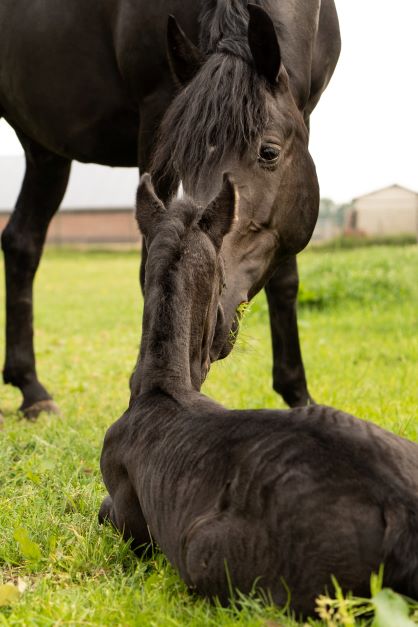
Foals that are lethargic and unwilling to stand or nurse or dont become curious and explore their surroundings should be evaluated. Some foals may have interest in getting up but have